
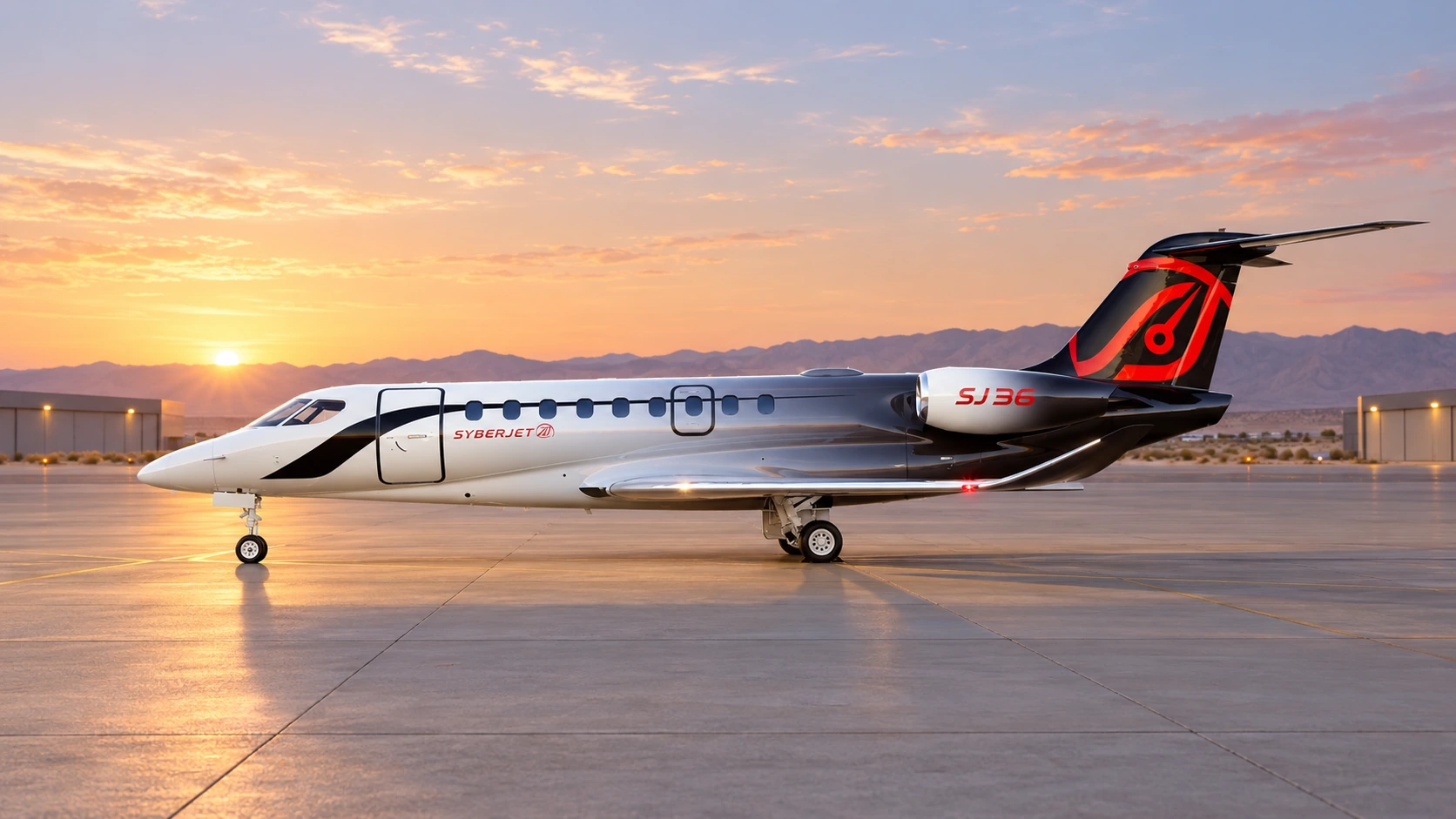
A light jet that promises 3,000 nautical miles of range, a Mach 0.88 maximum speed and sea-level cabin pressure at 41,000 feet is bound to attract attention. The SyberJet SJ36 puts those three targets in one aircraft, alongside a $14 million introductory offer.
The attraction is easy to understand. The harder question is how much of that promise will survive the journey from a full-scale mockup to a certified production jet.
As of October 28, 2026, the SJ36 remains in development and is not FAA-certified. SyberJet has unveiled its mockup, announced customer interest and outlined a 2032 delivery target. Its performance figures are projections, not results from a certified SJ36.
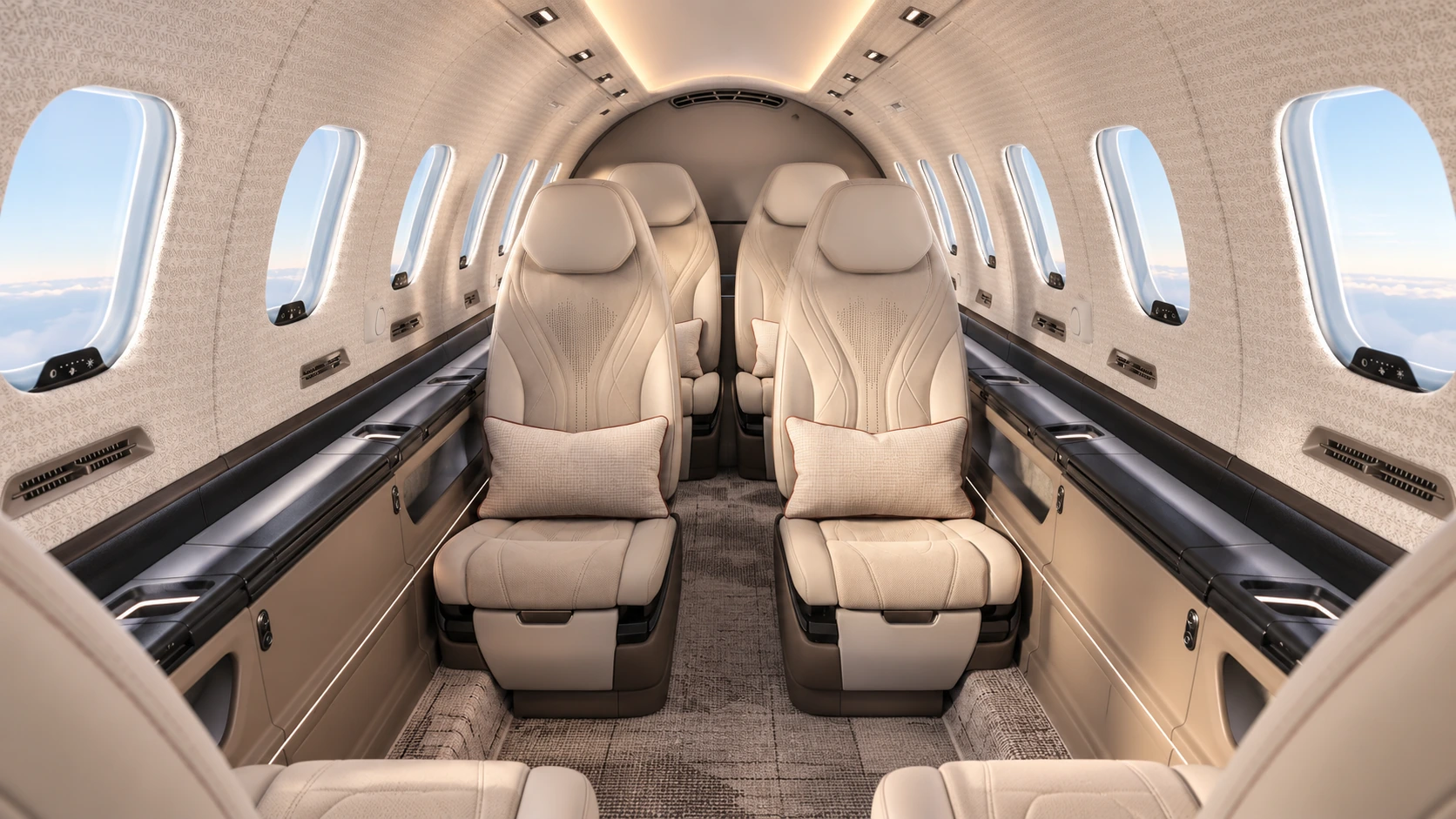
Image note: the exterior and cabin visuals are AI-generated editorial illustrations based on official SyberJet references. They are not photographs of an SJ36 flight or the October unveiling.
What SyberJet actually unveiled
On October 19, SyberJet presented the full-scale SJ36 mockup at Henderson Executive Airport near Las Vegas. The SyberJet World event gave visitors a first look at the intended aircraft and working SyberVision avionics panels ahead of NBAA-BACE.
That is a useful milestone. A full-size model lets potential owners judge a cabin, walk through its layout and see a cockpit at a scale that a brochure cannot convey. It does not demonstrate runway performance, handling, fuel consumption or range.
In its October 21 announcement, SyberJet reported letters of intent for more than 50 aircraft, including interest from charter operators, corporate flight departments and private owners. The company explicitly describes those LOIs as non-binding. They show interest in the proposition; they are not the same as firm orders or delivered aircraft.
SJ36 specifications: the current design targets
The table below summarizes SyberJet's published SJ36 figures and launch announcement. The range, speed and ceiling are separate targets, not a promise that the aircraft will achieve all three simultaneously.
| Item | Published target or announcement |
|---|---|
| Maximum range | 3,000 nautical miles, approximately 5,556 km |
| Maximum operating speed | Mach 0.88 |
| Maximum operating altitude | 49,000 ft |
| Sea-level cabin pressure | Up to 41,000 ft aircraft altitude |
| Cabin pressure differential | 12.0 psi |
| Seating | One pilot plus up to eight passengers |
| Main cabin dimensions | 16 ft long × 4.71 ft wide × 4.30 ft high |
| Engines | Two Williams International FJ44-4A turbofans |
| Projected takeoff thrust | 3,621 lbf per engine; 7,242 lbf combined |
| Exterior dimensions | 54.0 ft length; 51.1 ft wingspan; 17.0 ft height |
| Announced introductory price | $14 million under Passage One; announced later price $16 million |
| First deliveries | Manufacturer target: 2032, subject to development and certification |
Sources: SyberJet's SJ36 product specifications and its October 20 launch announcement, checked October 28, 2026. Figures and program terms may change.
Why the range and speed matter
The SJ36 develops the idea behind the earlier SJ30: a relatively compact aircraft with unusually ambitious speed, range and pressurization. A longer fuselage, updated engines and a new cockpit are intended to carry that idea into a larger aircraft.
If achieved, a 3,000-nautical-mile range could open more nonstop missions for buyers who would otherwise consider a larger jet. Avoiding a fuel stop can matter as much as a higher cruise speed: it removes an approach, a landing, a refuelling delay and another departure.
But a maximum operating speed is a limit, not a long-range cruise schedule. A buyer should not read “Mach 0.88” and “3,000 nautical miles” as a guaranteed 3,000-mile trip at maximum speed. Payload, winds, reserves, routing and the final aircraft configuration will shape the usable mission.
It is the same distinction between headline capability and a practical trip that we explore in our Gulfstream G800 versus G700 comparison. The aircraft are in very different classes, but the question is similar: what can the jet carry, over which route, under which assumptions?
Sea-level cabin pressure is the more unusual promise
The cabin-pressure target may be the SJ36's most distinctive feature. SyberJet intends to maintain pressure equivalent to sea level while the aircraft flies at 41,000 feet, using a published 12.0 psi pressure differential.
The 41,000-foot figure describes the aircraft's altitude while that sea-level cabin condition is maintained. It is separate from the proposed 49,000-foot operating ceiling. The published target does not say the cabin stays at sea-level pressure all the way to that ceiling.
This is an established part of the SJ30 family's design story, rather than a completely new idea. Applying it to the larger SJ36 is still a meaningful engineering commitment. It is a passenger-comfort proposition, not a guarantee that every traveller will arrive without fatigue.
A longer cabin, with light-jet proportions
SyberJet lists a 16-foot main cabin with space for up to eight passengers when one pilot is aboard. At 4.30 feet high and 4.71 feet wide, however, this remains a compact cabin. Buyers should not expect the standing room of a substantially larger business jet.
The planned interior emphasizes sculpted seating, configurable accent lighting and rear owner seats that the company says are approximately 30 percent wider than the other passenger seats. The mockup makes those choices easier to judge, but seating, finishes and equipment can still evolve before production.
For readers weighing cabin upgrades against a familiar light-jet platform, our Citation CJ3 Gen2 review offers a different point of comparison. A useful cabin is about seating, access and the way it works on a real journey, not simply the longest dimension in a specification table.
SyberVision brings opportunity—and development work
The planned SyberVision cockpit is a major part of the program. SyberJet's current avionics page describes six touchscreen surfaces: two 4K displays and four HD displays. That is more specific than the October launch release's description of six 4K screens; this article follows the current product description.
The company is also developing integrated automation, fly-by-wire controls and connected functions such as remote diagnostics, flight-plan transfer and cabin-temperature control. Its announcement includes SyberPilot AI-assisted flight. That should not be read as a promise of an autonomous, pilotless jet.
Single-pilot certification is the intended operating model. SyberJet also states that SyberVision remains in research and development and that features can change. A working mockup panel is useful evidence of an interface concept, but certification must establish how the complete aircraft and its systems behave together.
What the $14 million Passage One offer includes
The October 20 announcement sets out a $14 million SJ36 launch price under Passage One, compared with an announced $16 million price afterward. The program is limited to the first 250 customers across the announced offer; that is not a statement that 250 SJ36s have been sold.
Announced benefits include aircraft coverage and Williams TAP Blue engine coverage for up to 1,000 hours or five years, whichever comes first, plus two pilot type-rating training slots. The fuel benefit also has a 100,000-gallon cap, alongside the stated 1,000-hour and five-year limits. It is not unlimited free fuel.
These are launch-program announcements subject to terms and a definitive agreement. At the time of checking, the separate Passage One page still said “Coming soon.” Prospective buyers therefore need the actual written terms, configuration and payment conditions from the company before treating the package as a settled ownership cost.
Could the SJ36 change the light-jet market?
It could give buyers another way to approach long-distance travel in a smaller aircraft. The combination of speed, range and pressurization is the interesting part—not a claim that the SJ36 has already displaced established Citation or Phenom aircraft.
For now, those comparisons have an obvious limit. The SJ36 is a development program with a 2032 first-delivery target, rather than an aircraft an owner can put into service today. Flight testing, certification, production readiness and practical maintenance support must turn the design into an operating product.
The next useful milestones will be engineering progress, a flying test aircraft, demonstrated performance and a clearer certification path. The mockup has given the program something tangible. Delivering the aircraft described in the brochure is the more consequential test.
Quick questions about the SyberJet SJ36
Has the SJ36 flown?
The October 2026 unveiling was of a full-scale mockup. The releases cited here do not announce an SJ36 first flight, and SyberJet says the aircraft is not yet FAA-certified.
How much will the SJ36 cost?
SyberJet announced a $14 million introductory Passage One price and a planned $16 million price afterward. Availability, benefits and final purchase terms must be confirmed with the manufacturer.
When are SJ36 deliveries expected?
SyberJet is targeting 2032. This is a development schedule, not a guaranteed delivery date.
Sources and editorial approach
This article adapts an ElitoLux voice-over script into a standalone written analysis, checked against the manufacturer's information on October 28, 2026. It is not a flight test, an aircraft purchase recommendation or an independent verification of projected performance.