

The most revealing number in the Cessna Citation CJ3 Gen2 story might be 4.5 inches. That is the extra legroom Cessna has given the pilot. It will not shorten a flight or change the destination on a flight plan. For someone who spends hours in the cockpit, however, it could matter more often than another impressive brochure figure.
That is the character of this light jet. The CJ3 Gen2 retains the familiar combination of a 416-knot maximum cruise speed and 2,040-nautical-mile maximum range, while concentrating its improvements on power management, pilot comfort and the passenger environment. The question is whether those refinements make it a better aircraft to use, rather than simply a newer aircraft to buy.
ElitoLux editorial analysis, updated 20 October 2026. This article draws on the supplied editorial script and the manufacturer sources linked below; it is not a hands-on flight test. Aircraft and cabin images are AI-generated illustrations, not photographs of a delivered aircraft.
In this review
- CJ3 Gen2 specifications and performance
- What the range and runway figures mean
- Cockpit and autothrottle upgrades
- Cabin comfort and connectivity
- CJ3 Gen2 versus CJ3+
- Certification, service entry and the 2026 update
- The ElitoLux verdict
- Frequently asked questions
Cessna Citation CJ3 Gen2 specifications
The CJ3 Gen2 is recognisably a CitationJet: a compact fuselage, low-mounted wings, two engines beside the rear fuselage and a T-tail. Cessna has refined an established aircraft rather than changing its basic mission. At 51 feet 2 inches long, it remains a very different proposition from a large-cabin jet built around an intercontinental lounge.
| Specification | Published figure |
|---|---|
| Engines | Two Williams International FJ44-3A turbofans |
| Thrust | 2,820 lb per engine |
| Maximum cruise speed | 416 ktas / approximately 770 km/h |
| Maximum range | 2,040 nm / approximately 3,778 km |
| Takeoff field length | 3,180 ft / approximately 969 m |
| Maximum operating altitude | 45,000 ft |
| Maximum takeoff weight | 13,870 lb |
| Maximum payload | 2,135 lb |
| Length / wingspan | 51 ft 2 in / 53 ft 4 in |
| Cabin dimensions | 15 ft 8 in long, 58 in wide, 57 in high |
| Maximum occupants | Up to 10, including pilot or pilots; configuration dependent |
| Combined baggage volume | Approximately 65 cu ft |
The speed, range, dimensions and engine figures appear in Cessna's CJ3 Gen2 product card. The card also sets out the assumptions behind the headline performance figures.
A 2,040-nm range needs a little context
A maximum-range figure is a useful starting point, but an incomplete answer to a passenger's question: can we make this particular trip nonstop?
Cessna's published 2,040-nm number is based on a ferry mission at long-range cruise with NBAA IFR reserves, including a 100-nm alternate. It should not be read as a promise to carry every available occupant and a full baggage load that distance. Nor should it be combined with the maximum cruise speed as though both figures describe the same flight profile.
For an owner, the more useful exercise is to start with a normal trip: the people who actually travel, their bags, the airports at either end and the conditions the aircraft is likely to encounter. A smaller party travelling in favourable conditions presents a different mission from a heavier cabin load facing headwinds.
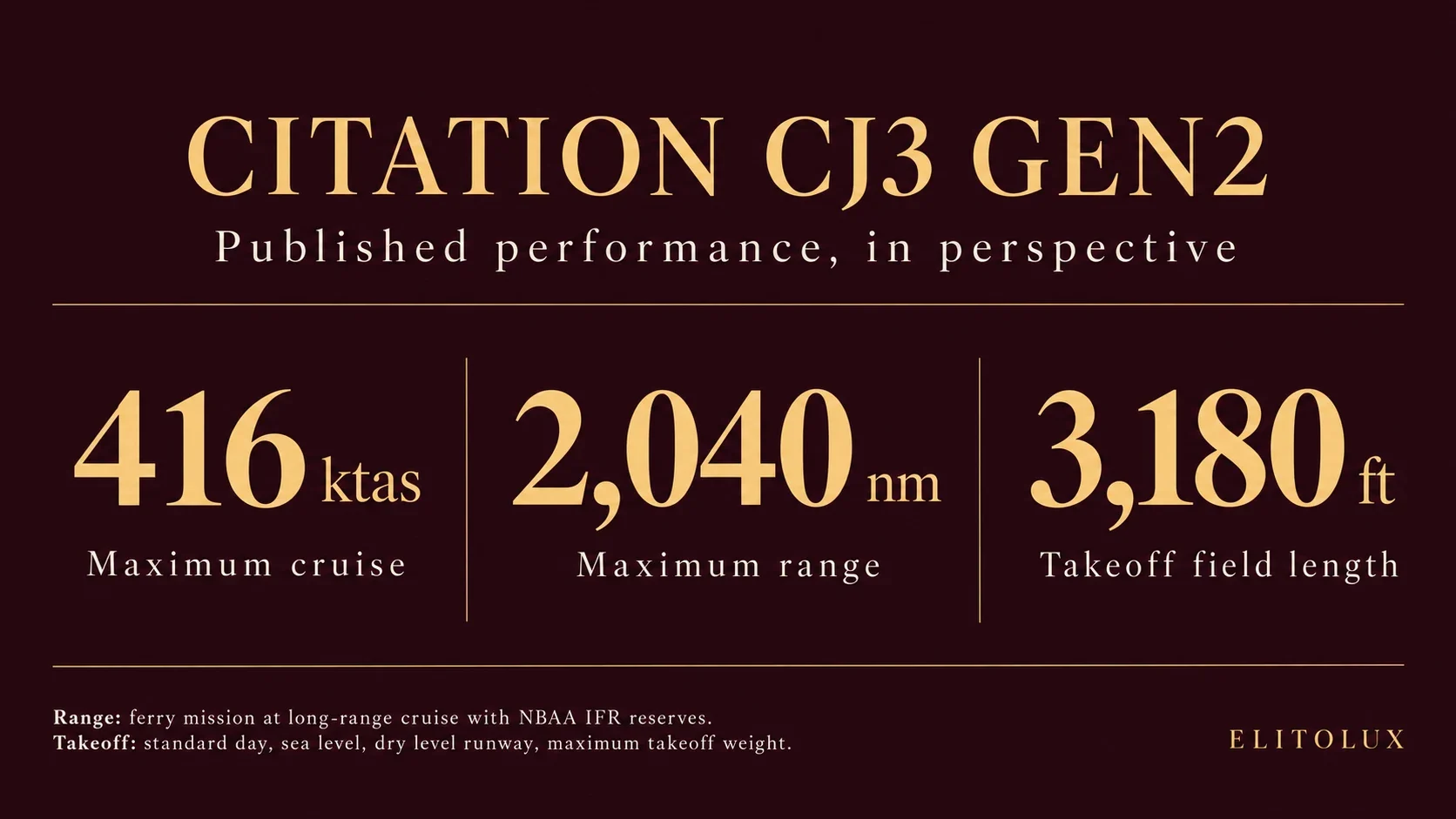
The same care applies to the 3,180-ft takeoff field length. Cessna bases its field-performance data on a standard day, zero wind, a dry and level paved runway, sea level and maximum takeoff weight. An airport's elevation, a hot afternoon, wind and runway condition can change the calculation. The figure indicates useful field capability; it is not permission to use any runway of that length.
Payload also deserves its own line in the discussion. The 2,135-lb maximum payload is not an allowance to add that much weight on top of every possible fuel load. Fuel, people and luggage compete within the aircraft's weight limits. Published numbers help compare aircraft, while actual dispatch decisions require approved performance data.
The cockpit is where the Gen2 case becomes convincing
The CJ3 Gen2's Garmin G3000 flight deck gains autothrottle technology, while the cockpit provides those additional 4.5 inches of pilot legroom. One change addresses routine workload; the other addresses the person doing the work.
Autothrottle can manage engine power in support of selected flight targets. That is particularly relevant to an aircraft intended to be operated by a single appropriately qualified pilot when the applicable rules and mission permit it. The benefit is assistance with a demanding job, not an invitation to stop monitoring the aircraft.
GDL60 connectivity supports functions such as flight-plan transfer, database updates and aircraft diagnostic-data transfer. These are less glamorous changes than a new cockpit screen in a launch photograph, but they address work that happens before and after flying as well as in the air. Textron describes the package in its January 2026 service-entry announcement.
The important distinction is between useful automation and a different aircraft generation. Garmin Emergency Autoland belongs to the newer Citation Gen3 development story discussed below; it should not be casually added to the Gen2 equipment list.
A better cabin, within honest light-jet dimensions
At approximately 57 inches high and 58 inches wide, this is a cabin for settling into a seat, not strolling around a large lounge. That physical limit is worth understanding before admiring fabrics and lighting. Buyers looking for standing headroom or a separate bedroom are shopping for a different class of aircraft.
Within that compact space, the Gen2 updates are practical. Redesigned seats have tracking capability, with optional swivel functionality. Executive tables support work or refreshments, RGB accent lighting changes the atmosphere, and USB-C power at each seat reduces the familiar hunt for a charging connection. Wireless charging is also available in the main cabin.
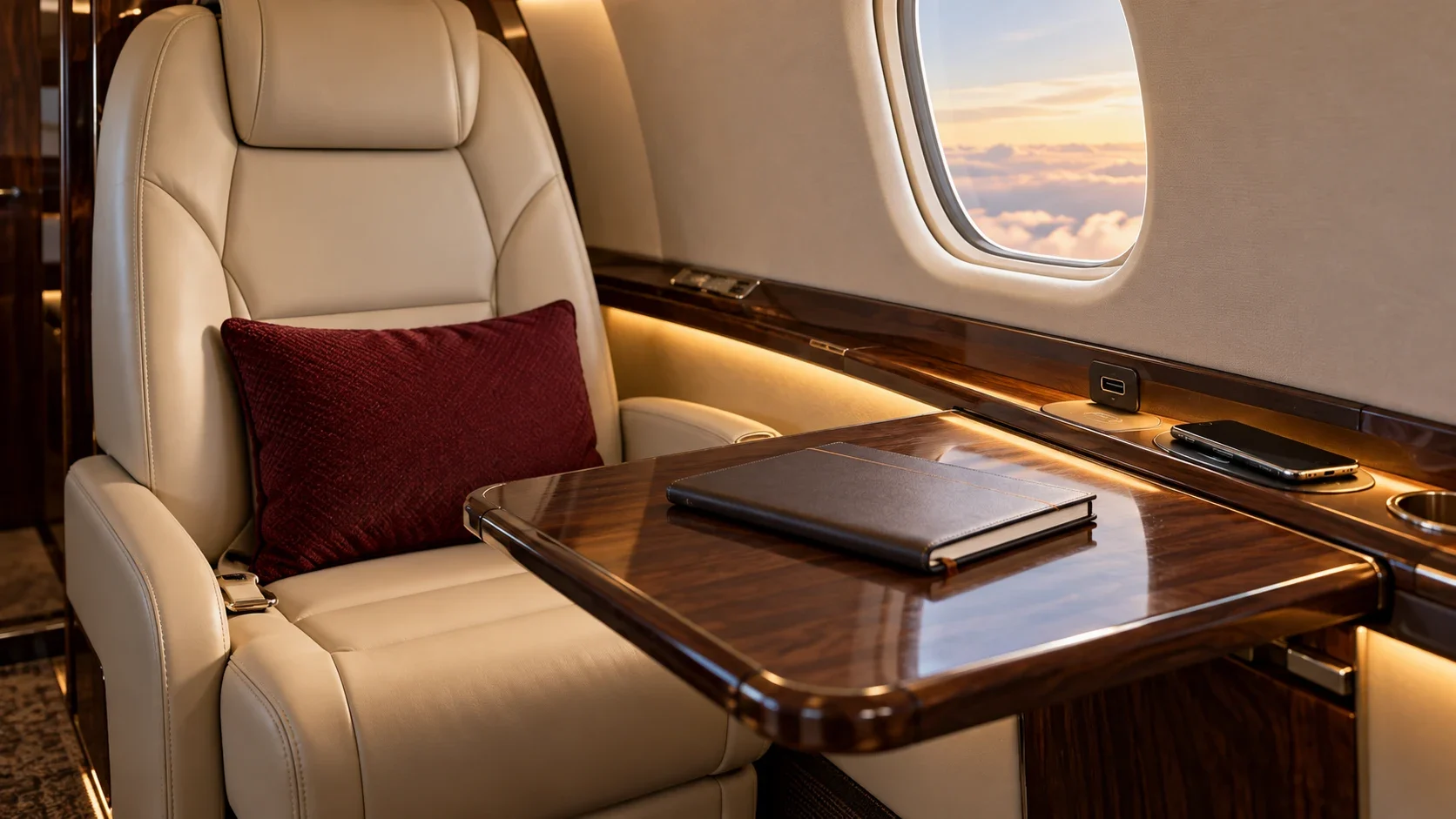
The lavatory receives CoolView skylights, with an optional sink and vanity, and can be serviced externally. It is an easy feature to overlook in a glamorous aircraft overview, yet it affects both the passenger experience and the ground-handling routine. Cessna outlines the cabin changes in its Gen2 certification announcement.
Cessna describes accommodation for up to ten occupants, depending on the arrangement. Occupants includes the pilot or pilots. It is not the same as ten passenger seats, and a maximum seating arrangement is not necessarily the one an owner would choose for regular trips.
CJ3 Gen2 versus CJ3+: what actually changes?
Anyone expecting a dramatic jump in cruise speed or range will find a more measured story. The familiar CJ3+ combination of 416 knots and 2,040 nm remains the Gen2 headline. The changes make more sense when viewed as an improvement to daily use of the platform.
| Area | What matters in the Gen2 |
|---|---|
| Core performance | Familiar speed and range, rather than a new aircraft category |
| Power management | Garmin autothrottle technology |
| Pilot accommodation | 4.5 additional inches of legroom |
| Connected workflow | GDL60-supported data transfer and updates |
| Passenger experience | Updated seating, charging, lighting and lavatory provisions |
Textron's 2019 product fact book lists the earlier CJ3+ performance figures. Comparing a real used aircraft with a new Gen2 still requires checking its individual equipment, condition and maintenance history; a model name alone will not describe every difference.
The 2026 update: in service, with Gen3 on the horizon
The Gen2 has moved beyond the announcement stage. Textron announced FAA type certification on 13 October 2025, following 445 flight-test hours, and announced entry into service on 8 January 2026.
On 14 October 2026, the company said the CJ3 Gen2 would make its NBAA-BACE show debut, with its static display planned at Henderson Executive Airport on 20 and 21 October. That is a show appearance by an aircraft already in service, not a new certification or an engine change.
There is also a newer development to keep separate. In its 19 October 2026 Gen3 program update, Textron reported more than 60 flight-test hours for the CJ3 Gen3 as certification work continued. The Gen3 family includes Garmin Emergency Autoland. As of that announcement, the CJ3 Gen3 was still a development program; it should not be confused with the Gen2 already delivered to customers.
The ElitoLux verdict
The CJ3 Gen2's strongest argument is the collection of improvements an owner might notice on an ordinary journey: more space at the controls, help managing power, easier data handling and a cabin better equipped for the way people travel now.
It does not remove the compromises of a light jet. Cabin height remains limited, fuel and payload still require trade-offs, and the maximum-range number needs its conditions attached. Those limitations do not make it a poor aircraft. They make it important to choose it for the right job.
For someone whose regular missions fit the CJ3 platform, the Gen2 deserves attention because it improves the experience around established performance. For someone considering a well-equipped CJ3+, the decision is less about a faster trip and more about how much the cockpit and cabin refinements are worth in everyday use.
Explore more ElitoLux private-jet reviews, or see how different missions change aircraft priorities in our Dassault Falcon 10X analysis.
Frequently asked questions
How far can the Citation CJ3 Gen2 fly?
Cessna publishes a maximum range of 2,040 nautical miles. Its product-card figure uses a ferry mission at long-range cruise with NBAA IFR reserves and a 100-nm alternate. Passenger load, baggage, weather and flight-planning requirements affect the distance available on a particular trip.
How many passengers does the CJ3 Gen2 carry?
The manufacturer describes up to ten occupants, depending on configuration. That total includes the pilot or pilots, so it should not be advertised as ten passengers.
Does the CJ3 Gen2 have autothrottle or Autoland?
The Gen2 features Garmin autothrottle technology. Garmin Emergency Autoland is part of the later Gen3 program, rather than a Gen2 feature to assume from the aircraft's name.
Is the CJ3 Gen2 already in service?
Yes. Textron announced its entry into service on 8 January 2026, following FAA certification announced in October 2025.
Sources and editorial notes
Performance and equipment references: Cessna's CJ3 Gen2 product card; Textron Aviation's October 2025 certification announcement, January 2026 service-entry announcement, October 2026 NBAA-BACE announcement and October 2026 Gen3 program update; and Textron's earlier CJ3+ product fact book, all linked alongside the relevant discussion above. Analysis reflects information checked on 20 October 2026. Published specifications are explanatory comparisons, not a substitute for approved aircraft operating information.