

A production rollout is an unusually tangible moment in an aircraft program. The drawings, simulators and test flights finally have a counterpart built for the production line. That is where the Cessna Citation CJ4 Gen3 now stands.
Textron Aviation announced the first production-unit rollout on October 20, 2026. The aircraft carries the familiar CJ4 proposition into a new generation, with a substantial change where the pilot sits: Garmin G3000 PRIME avionics and Emergency Autoland. For an owner-flown light jet, those developments deserve as much attention as the cabin finish.
What the rollout actually tells us
In its October 20 announcement, Textron describes the aircraft as advancing toward entry into service. The milestone concerns production progress; the release does not announce a first customer handover or completed Gen3 certification.
That distinction helps explain why an aircraft can look finished while its program still has work ahead. A production system must turn engineering intent into repeatable assemblies, documentation and quality checks. Flight testing must establish the approved capability of the finished design. Both matter to the customer who eventually expects a dependable aircraft on a Monday morning.
A new interface for the single-pilot workload
G3000 PRIME changes how information and controls are presented. Textron's CJ4 Gen3 product page describes touchscreen avionics, autothrottles and Emergency Autoland as central to the update.
The interesting question is how naturally the cockpit works when several things happen at once: an amended clearance, weather ahead and an approach to prepare. A clean interface can make relevant information easier to reach. Its real value still depends on training, procedures and a pilot who understands what the automation is doing.
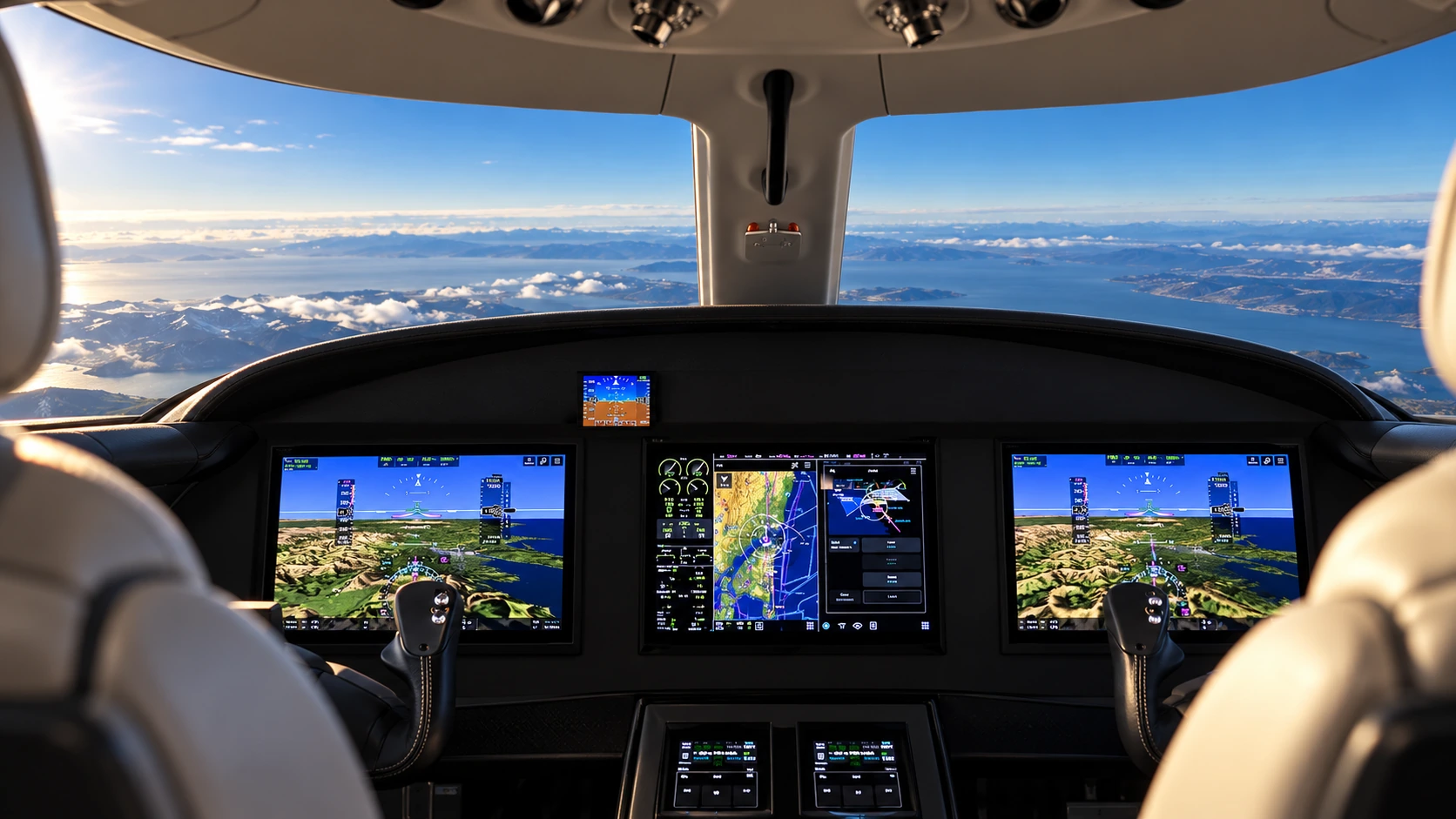
Emergency Autoland is designed to guide the aircraft to a suitable airport and a complete landing in an emergency such as pilot incapacitation. It is a last-resort safety capability, not permission to treat routine flying as an unattended task. Passengers also need a clear briefing about the system, rather than a vague reassurance that the aircraft can fly itself.
The published numbers, in context
| CJ4 Gen3 figure | Manufacturer listing |
|---|---|
| Maximum range | 2,165 nautical miles |
| Maximum cruise speed | 451 KTAS |
| Maximum operating altitude | 45,000 feet |
| Engines | Two Williams FJ44-4A turbofans |
These are separate published specifications. A real trip needs a payload, reserve policy, weather forecast and runway assessment; the maximum range and fastest cruise figure should not be combined into an imaginary guaranteed mission.
Flight testing continues around the production milestone
A separate October 19 update reported more than 1,220 combined flight-test hours across the CJ4 Gen3, CJ3 Gen3 and M2 Gen3 programs. Nearly 1,100 of those hours were associated with the CJ4 program. Recent work included hot-weather and electrical-system certification testing.
That detail is more useful than a dramatic claim about being almost ready. Certification involves many operating conditions, including ones an ordinary demonstration flight never encounters. A polished cabin cannot show how an electrical fault is handled or how a system behaves in demanding temperatures.
What to watch next
The next consequential announcements will concern approvals, the service-entry schedule and actual customer deliveries. Those will move the story from a production milestone to an aircraft an operator can put to work.
Readers considering the wider light-jet field can explore our CJ4 Gen3 versus Phenom 300EV comparison. For the smaller Citation's cabin and cockpit changes, see the CJ3 Gen2 feature. Each answers a different question: how the aircraft is developing, how competing designs differ and what the cabin offers.
Image note: AI editorial illustration based on an official CJ4 Gen3 reference; not a photograph of the production rollout. Information checked October 29, 2026. ElitoLux has not independently flight-tested, sea-trialled or benchmarked the products described.