
A new yacht can be designed around the latest machinery from the beginning. An existing yacht has a harder problem: improve what happens in the engine room without asking the vessel to become an entirely different boat.
That is what makes Feadship's October 21, 2026 partnership with AtomicOne worth examining. The companies want to bring MXBuster combustion-optimisation technology to yachts over 30 metres, following more than a year of operation aboard an existing Feadship.
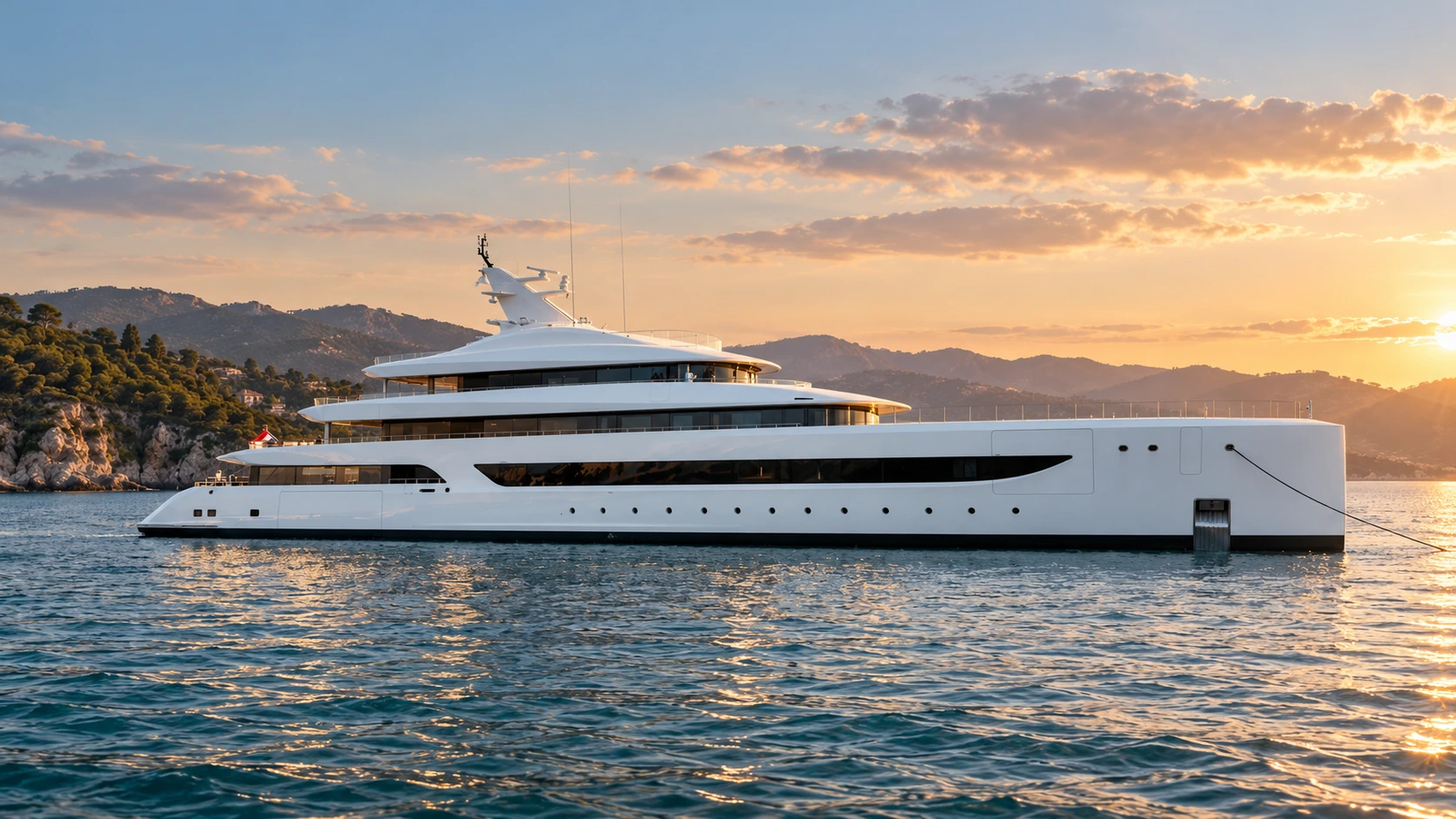
The cover is an AI illustration based on Feadship Project 828, used to represent the broader fleet. Feadship has not identified the MXBuster trial yacht in the cited announcement.
The idea starts at the intake
According to Feadship's announcement, MXBuster introduces hydrogen produced from purified water, together with conditioned water vapour, into the engine's intake air. The add-on is intended to improve combustion and can work with conventional diesel or HVO.
This is an upgrade to the combustion process of an existing engine. It should not be described as replacing diesel propulsion with a hydrogen-powered yacht. A reader needs to know what the equipment changes before judging a headline about cleaner operation.
Separate the different test results
Feadship reports external validation involving organisations including Lloyd's Register and SGS, and cites NOx reductions of up to 55 percent in performance data. It also describes reduced soot and encouraging onboard observations.
The fuel-consumption figure requires particular care. The release's up-to-14-percent reduction concerns separate tests on modern land-based diesel engines. It is not a published, universal saving for every yacht, nor the measured percentage saving of the unnamed trial vessel.
| Reported evidence | How to read it |
|---|---|
| More than a year aboard a Feadship | Reported operating experience on one installation |
| Up to 55% NOx reduction | A cited test result, not a fleet-wide guarantee |
| Up to 14% fuel reduction | Separate land-engine tests |
Those distinctions strengthen the story. They allow an interesting engineering development to be discussed without turning a best-case result into a promise the public evidence does not support.
Why a compact installation could matter
An engine room has to support the vessel every day, including during maintenance. Space is valuable because equipment needs access as well as a footprint. A seemingly small addition can affect the ability to inspect another component or remove it for service.
Our assessment is that the appeal of a compact retrofit lies partly in that practical reality. If an upgrade fits the existing arrangement with manageable disruption, it may be more useful than a larger theoretical improvement requiring extensive rebuilding. That possibility still needs to be assessed for the actual vessel and machinery.
Feadship also describes research into a future machinery-room approach combining combustion optimisation and compact exhaust treatment. It is a direction for development, rather than proof that every conventional treatment requirement can already be removed.
The next useful evidence
A persuasive next step would be comparable measurements across more installations: the engine and load used, the baseline, the fuel, the operating conditions and the energy required by the added equipment. That would let readers understand the result rather than simply repeat its largest percentage.
Emissions and fuel consumption also answer different questions. A reduction in one pollutant does not automatically establish the same percentage reduction in total fuel use or every environmental impact of running a yacht.
An engineering story for the fleet already afloat
Our HIVE feature explores a possible future yacht. MXBuster brings attention back to vessels that already exist and the less visible work of improving them.
That makes the partnership useful to follow. The announcement provides reported service experience and a route toward broader application. Further transparent operating data will determine how far the technology can travel beyond the first installation. For a separate construction milestone, read about Baglietto's ninth T52.
Image note: AI illustration based on Feadship Project 828, representing the broader fleet. The MXBuster trial yacht is not identified in the announcement. Information checked October 29, 2026. ElitoLux has not independently flight-tested, sea-trialled or benchmarked the products described.