
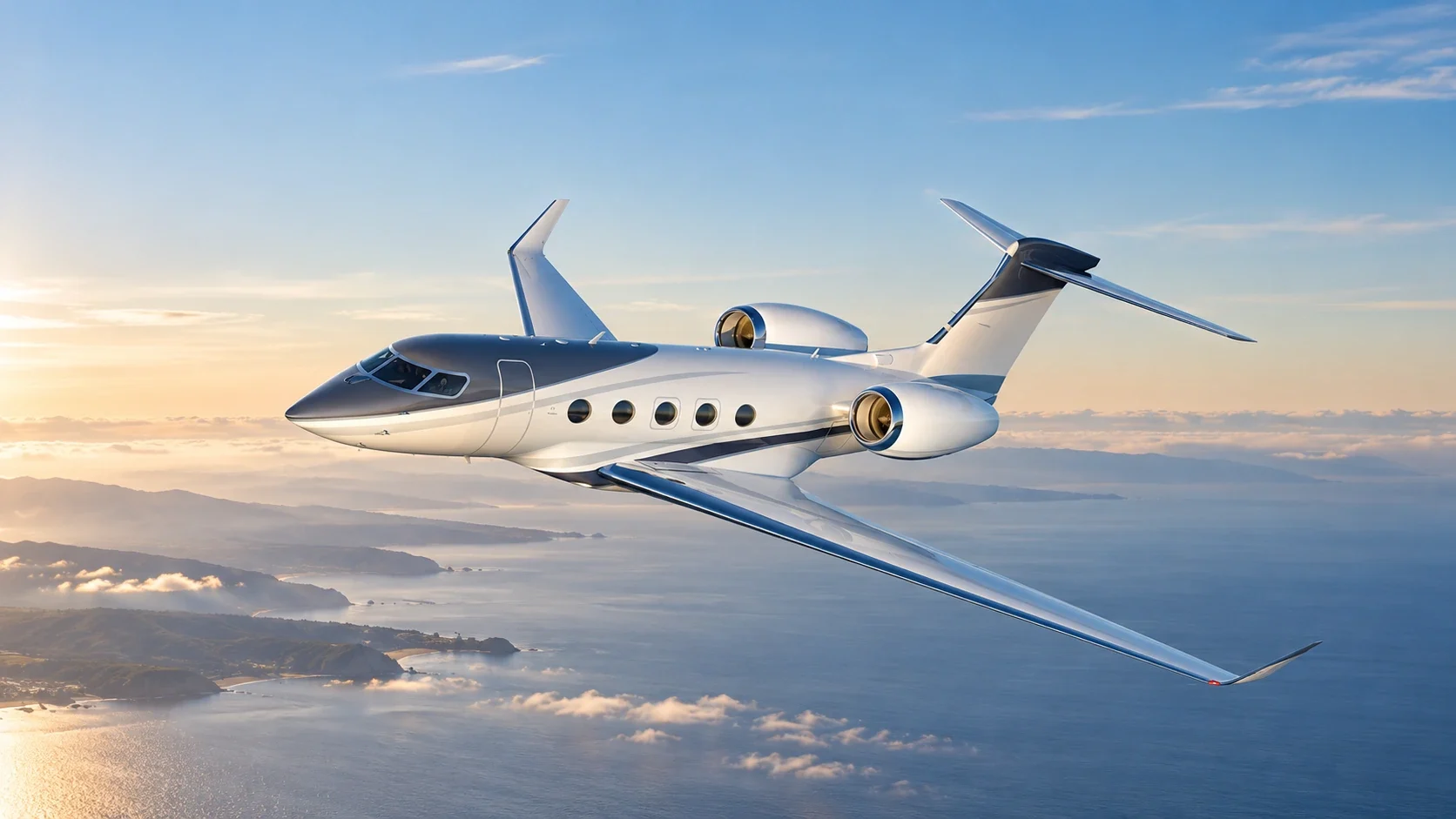
Gulfstream's latest G400 update brings the cabin into flight testing. Here is what the October milestone tells us, how the published performance figures fit together, and what still needs confirmation.
A finished cabin can look convincing under showroom lights. Flying it introduces a different set of questions: how does the space work when people move around, use its systems and spend hours inside it? For the Gulfstream G400, that part of the story is becoming more tangible.
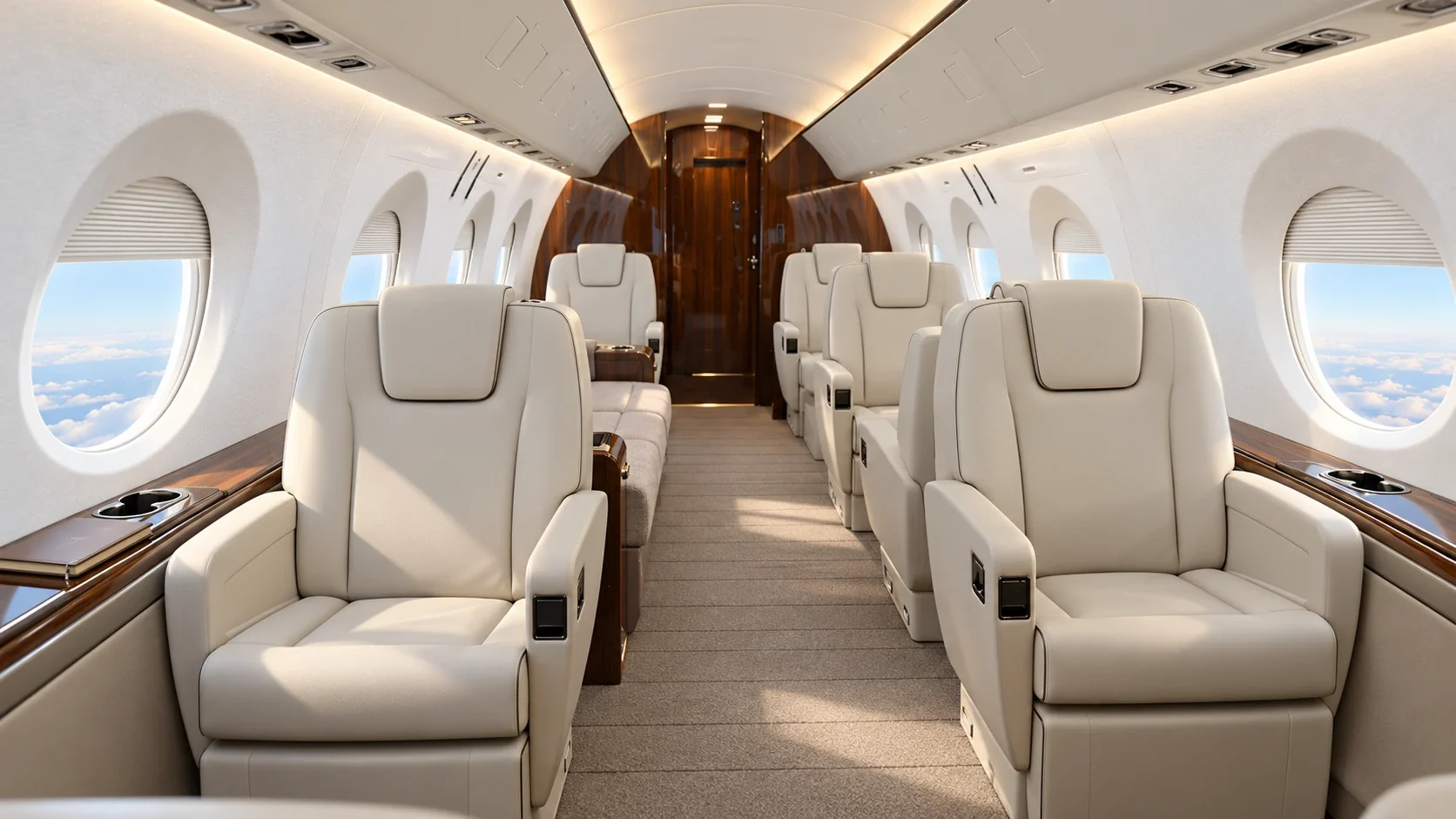
In its 19 October 2026 announcement, Gulfstream reported the first flight of a fully outfitted G400. The aircraft flew from Dallas Love Field for 2 hours and 46 minutes, reaching 48,000 feet. Its 11-passenger interior spans two-and-a-half living areas, with the aircraft assigned to cabin-system, functionality and comfort evaluation.
Why flying the cabin matters
The value of this milestone is practical. A cabin is a collection of systems and spaces that must work together, rather than a set of seats chosen from a catalogue. A buyer will eventually judge it through ordinary details: whether a conversation feels easy, whether the workspace is comfortable and whether moving through the aisle becomes awkward once everyone is settled.
Those are the kinds of questions an outfitted test aircraft helps a programme investigate. The announcement does not publish independent cabin-noise measurements or passenger-review results, so it would be premature to describe this flight as proof of a particular comfort level.
A fast flight to Las Vegas, with the right context
The same release reported a Miami-Las Vegas city-pair speed record: 4 hours and 8 minutes, at an average speed reported as Mach 0.89, using a sustainable aviation fuel blend. Gulfstream also cited earlier high-altitude work in Telluride and cold-weather testing in Iqaluit.
A city-pair result is useful evidence from a particular journey. It should not become a promise that every flight between two cities will take the same time. Weather, air-traffic routing and operating choices all influence the trip. We describe this as a manufacturer-reported record; the release does not state that an independent record authority has ratified it.
The G400 numbers worth reading together
Gulfstream's published specifications give the following picture. The range figures are preliminary theoretical figures with eight passengers, three crew and NBAA IFR reserves; actual range varies with conditions and outfitting.
| Item | Published figure |
|---|---|
| Long-range cruise | 4,200 nautical miles at Mach 0.85 |
| High-speed cruise | 3,950 nautical miles at Mach 0.88 |
| Maximum operating speed | Mach 0.90 |
| Maximum cruise altitude | 51,000 feet |
| Offered seating layouts | 9, 11 or 12 passengers |
| Panoramic oval windows | 10 in total |
| Engines | Two Pratt & Whitney Canada PW812GA |
| Flight deck | Gulfstream Symmetry Flight Deck |
Source: Gulfstream G400 product information. Preliminary performance remains subject to change. Seating capacity and the loading assumed for quoted range are different things; the maximum seat count does not mean the aircraft carries that many people over its maximum advertised distance.
The useful buying question is how much range remains for a specific passenger load, baggage, interior and route. A headline range figure helps establish a starting point. A mission assessment with the manufacturer or operator is what turns it into a useful travel plan.
This is a new stage of testing, not the G400's first-ever flight
The current-generation G400 first flew on 15 August 2024. That initial Savannah flight lasted 2 hours and 54 minutes and reached Mach 0.85 and 41,000 feet, according to General Dynamics' announcement. The October 2026 news concerns the fully outfitted test aircraft.
Keeping those milestones separate makes the update easier to understand. The programme has progressed beyond its original airborne debut; the latest announcement adds an aircraft focused on the environment future passengers will use.
What happens next?
The October announcement describes continued progress toward certification. It does not announce type certification, a firm certification date or the first customer delivery. Those milestones should be confirmed separately when Gulfstream or the relevant authority announces them.
For now, the more useful story is the work behind the cabin photograph. An attractive interior gives the G400 its first impression. Evaluating that interior in flight is part of establishing how it will function as an aircraft people can eventually use.
Gulfstream G400: quick answers
Does this update confirm entry into service?
No. It reports flight-test progress. The cited October release does not confirm certification or a customer-delivery date.
Is the new G400 the same as an older G400 listed for sale?
This article covers the current-generation PW812GA-powered programme. Check the aircraft generation and serial details when comparing it with older aircraft carrying the G400 name.
For more context on Gulfstream's larger aircraft, read our G800 versus G700 comparison, or explore the Private Jets collection.
Editorial note: researched 24 October 2026 from manufacturer and parent-company sources. This is an editorial analysis, not a flight test or cabin visit. Both accompanying images are AI-generated illustrations using official G400 references.