
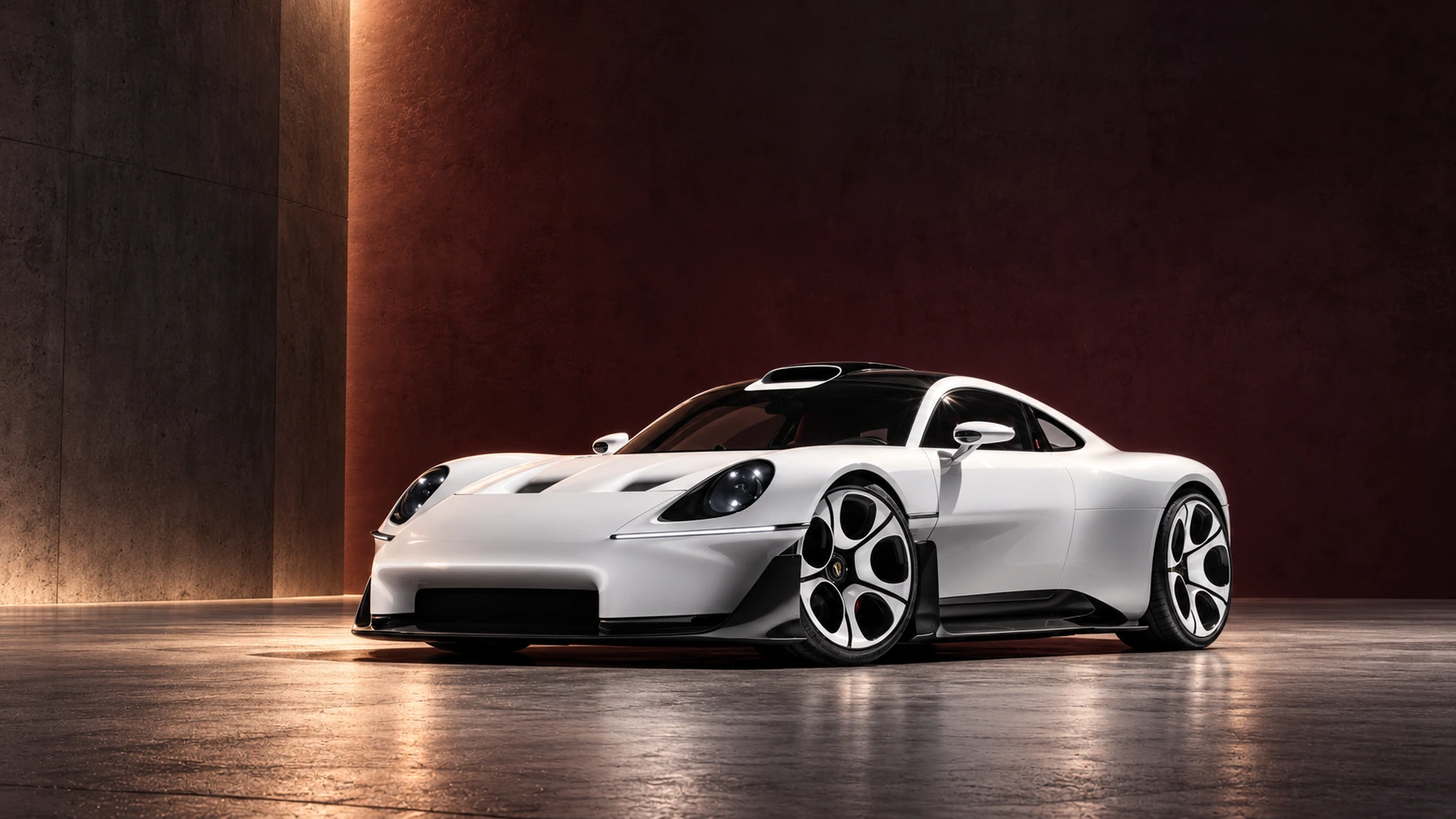
The Porsche Mission S has something many modern concept cars seem determined to remove: a dashboard that invites you to touch individual controls. There are round instruments, physical switches and a clear sense that the person holding the steering wheel should remain the center of the experience.
Presented on October 15, 2026, the vision model also points toward a larger product idea. Porsche is developing a mid-engine super-sports-car platform above the 911. The Mission S shows a possible design direction for that ambition, rather than a production car with a confirmed price and delivery slot.
A place above the 911
In its Mission S announcement, Porsche outlines an enduring addition to its sports-car offering, with the engine positioned centrally. The concept combines a low nose, pronounced front fenders, a flowing roof and a strongly integrated rear treatment.
Positioning a new car above the 911 creates a delicate design problem. It needs enough family resemblance to feel like a Porsche while giving customers a reason to understand it as something different. Proportions can do that work more convincingly than an oversized badge or an aggressive new lighting signature.
The mid-engine arrangement is especially relevant to the silhouette. It changes how the cabin, rear body and cooling surfaces relate to one another. That makes Mission S worth studying as a complete shape, rather than a collection of isolated references to earlier cars.
The cabin takes a different view of modernity
Porsche describes five circular instruments, a mixture of analogue and digital elements, tactile controls and a retractable smartphone solution in place of a permanently integrated center display. The white, grey, red and black palette draws on its motorsport design history.
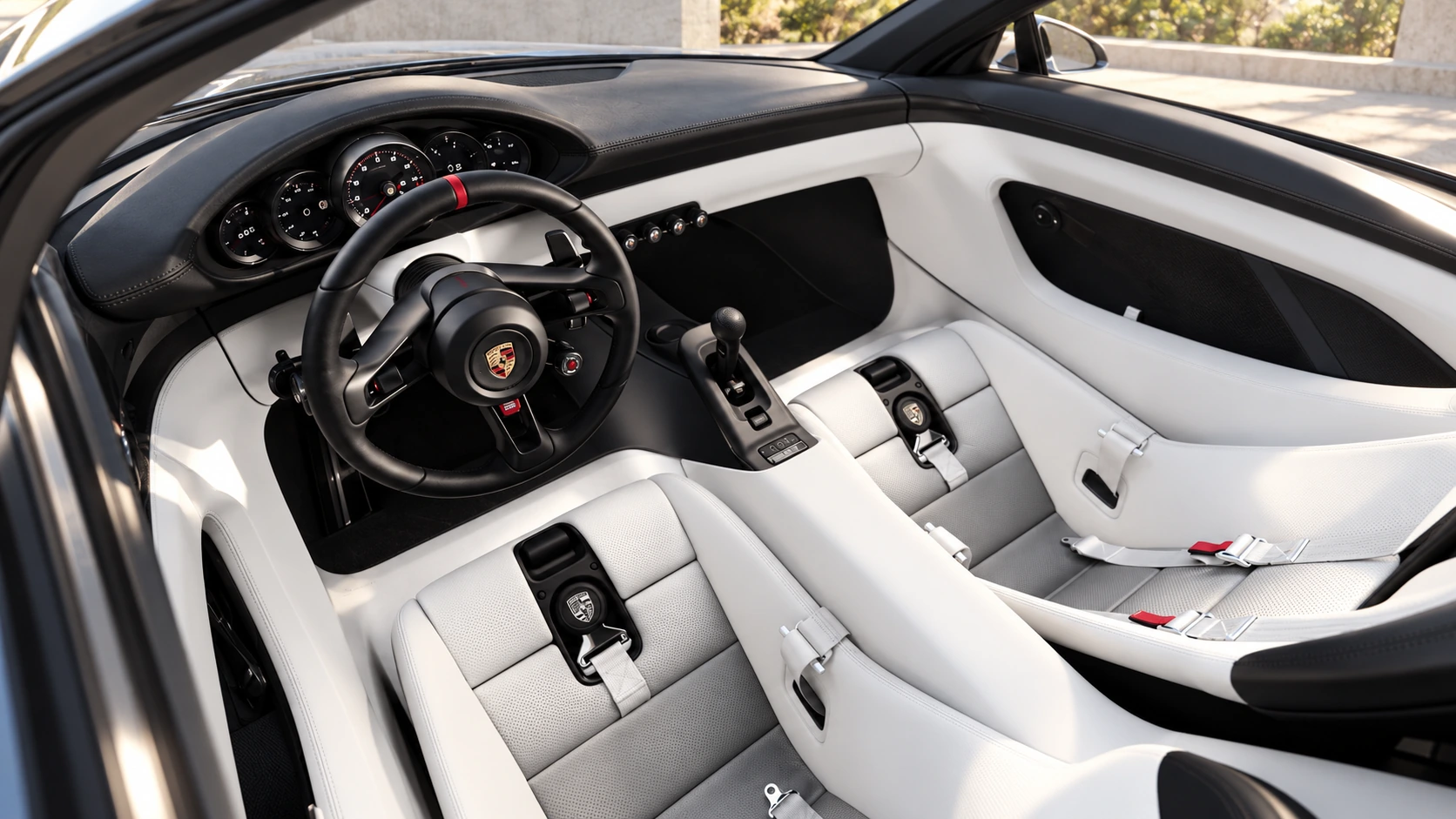
That is a compelling direction because familiarity can be useful. A distinct control with a recognizable position can become easy to find through repetition. A screen offers flexibility, but its interface also needs to communicate what is available and what has changed.
Neither approach automatically produces a better car. The interesting possibility is a thoughtful division of work: recurring driving tasks within easy reach, adaptable information where flexibility actually helps. A concept can demonstrate that philosophy; production engineering has to make it durable and intuitive for many different drivers.
What is confirmed, and what remains open?
| Question | Current public position |
|---|---|
| What is Mission S? | A vision model |
| What does it preview? | A mid-engine platform above the 911 |
| Confirmed production output? | No figure established by the cited unveiling |
| Price and customer delivery? | Not established by that announcement |
Porsche's strategy presentation provides the wider context for the planned product direction. It does not turn every visible show-car detail into a guaranteed production feature.
The appeal is more than a performance number
It is tempting to judge a new Porsche by estimating horsepower, acceleration or a future lap time. None of those guesses helps explain what is distinctive here. Mission S makes a case for a recognizable shape and a more deliberate relationship between the driver and the controls.
Our 911 Turbo S T-Hybrid feature examines a current performance-engineering story. Mission S answers a different question: what might the next kind of Porsche sports car feel like to inhabit?
The next useful news will concern the platform itself, the production plan and the details that survive the transition from a design statement. For now, the vision model gives enthusiasts something more interesting than a speculative specification sheet—a coherent proposal for where Porsche could go next.
Image note: AI editorial illustration based on Porsche’s Mission S reference; not a photograph of a production car. Information checked October 29, 2026. ElitoLux has not independently flight-tested, sea-trialled or benchmarked the products described.