
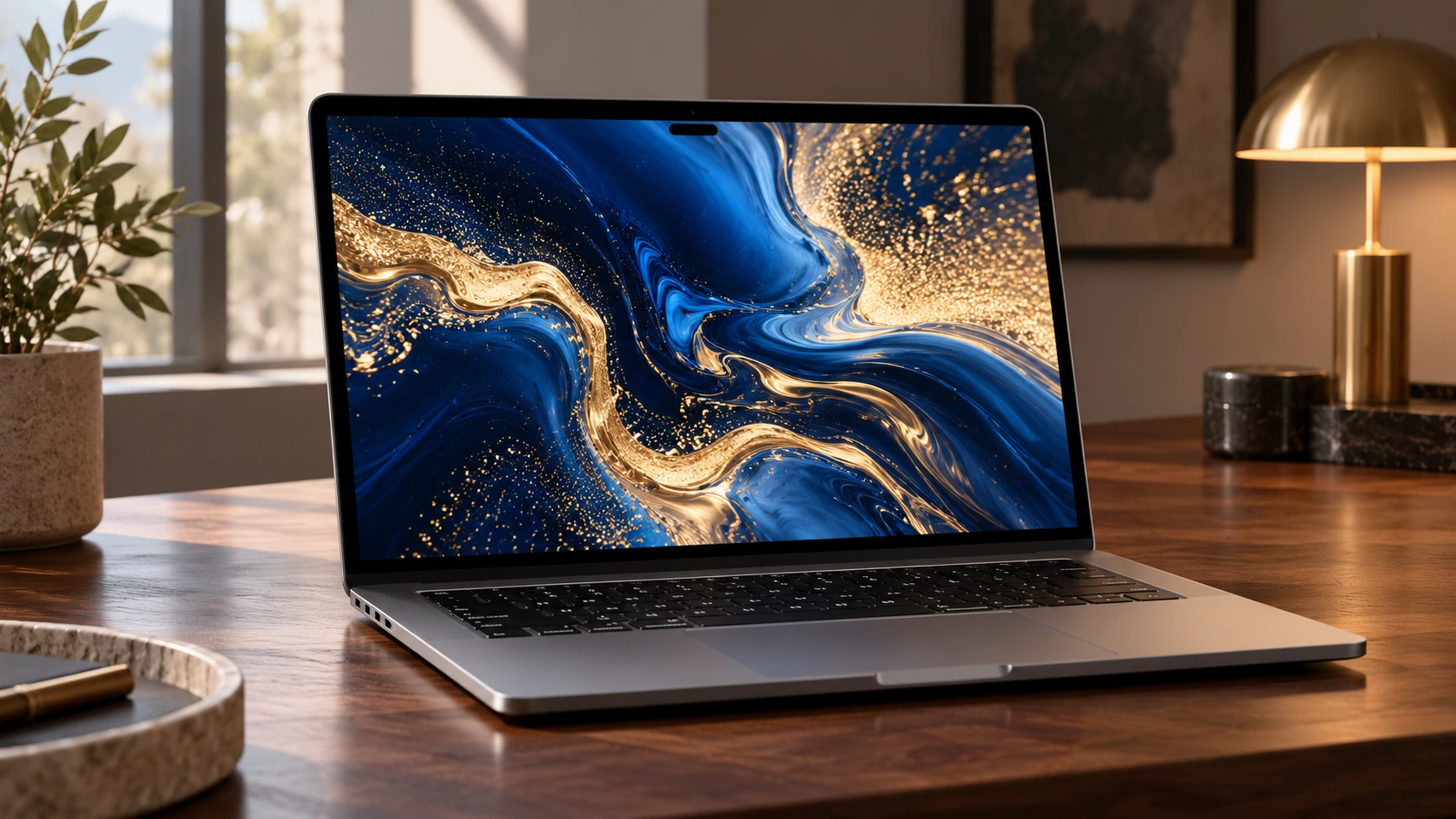
For years, the MacBook Pro's screen has been something to look at while the keyboard and trackpad did the work. Apple's latest announcement changes that relationship. The new PROLED XDR models bring touch to the Mac alongside a tandem OLED display and a redesigned portable chassis.
Announced on October 28, 2026, the 14- and 16-inch machines are available to preorder, with availability scheduled from November 6. The most interesting question is what this changes for someone editing photographs, building a 3D scene or reviewing a project away from a desk.
Two MacBook announcements that need separating
Apple's PROLED XDR announcement specifies M5 Pro and M5 Max. The base 14-inch MacBook Pro with M6 was announced separately the previous day. They are different products in the current lineup, so a newer chip number alone does not describe every aspect of the machine.
That makes configuration unusually important. Buyers should identify the exact display, processor, memory and storage combination in the order, rather than relying on a family name or a photograph shared without its specifications.
What tandem OLED could mean for creative work
Apple lists a 120Hz variable refresh rate, P3 and Adobe RGB coverage, and brightness of up to 2,000 nits for HDR and SDR. These are manufacturer specifications; ElitoLux has not measured the panel.
A useful display has to do more than make a launch photograph look spectacular. Dark details should remain distinguishable, gradients should look smooth and color should stay predictable through a working session. For a photographer, consistency between the editing environment and the intended output can matter more than an eye-catching maximum brightness number.
Touch adds another variable. Moving a model directly or adjusting an image with a gesture may feel natural in some applications. Long typing sessions will still favor the keyboard, while precise repeated edits may suit a trackpad or mouse. The best implementation will let those methods coexist without making every task depend on reaching toward the screen.
The headline specifications
| Area | Apple's announced offering |
|---|---|
| Sizes | 14 and 16 inches |
| Display | PROLED XDR tandem OLED with touch |
| Processors | M5 Pro or M5 Max |
| Maximum configuration | Up to 128GB unified memory and 16TB storage |
| Availability target | November 6, 2026 |
Maximum options are not the specification of every model. Apple's battery-life claim of up to 24 hours also depends on its stated tests. It should not be treated as a promise of a full day rendering complex scenes at maximum load.
Start with a project, then choose the configuration
A sensible way to assess the new machine is to bring a representative project: a large photo catalog, a demanding timeline or the model used every week. Check how it opens, how quickly previews settle and whether the applications you need support the new interaction methods well.
Local AI makes memory planning more relevant, but capacity alone is not a complete performance result. Software support, model format and the amount of memory left for everything else affect the experience. Our Mac Studio local-AI feature explores the desktop version of that question.
A more physical direction for the Mac
The appeal here is the combination of a portable workstation and a screen that becomes part of the control surface. That could make a meaningful difference to some creative workflows, while others will benefit more from a comfortable keyboard, dependable ports and familiar software.
Independent testing will help establish sustained performance and display behavior. For now, the announcement provides a concrete new choice. For a different approach to portable local computing, read our Surface Laptop Ultra analysis.
Image note: AI editorial illustration based on Apple product imagery. Screen artwork is illustrative. Information checked October 29, 2026. ElitoLux has not independently flight-tested, sea-trialled or benchmarked the products described.