
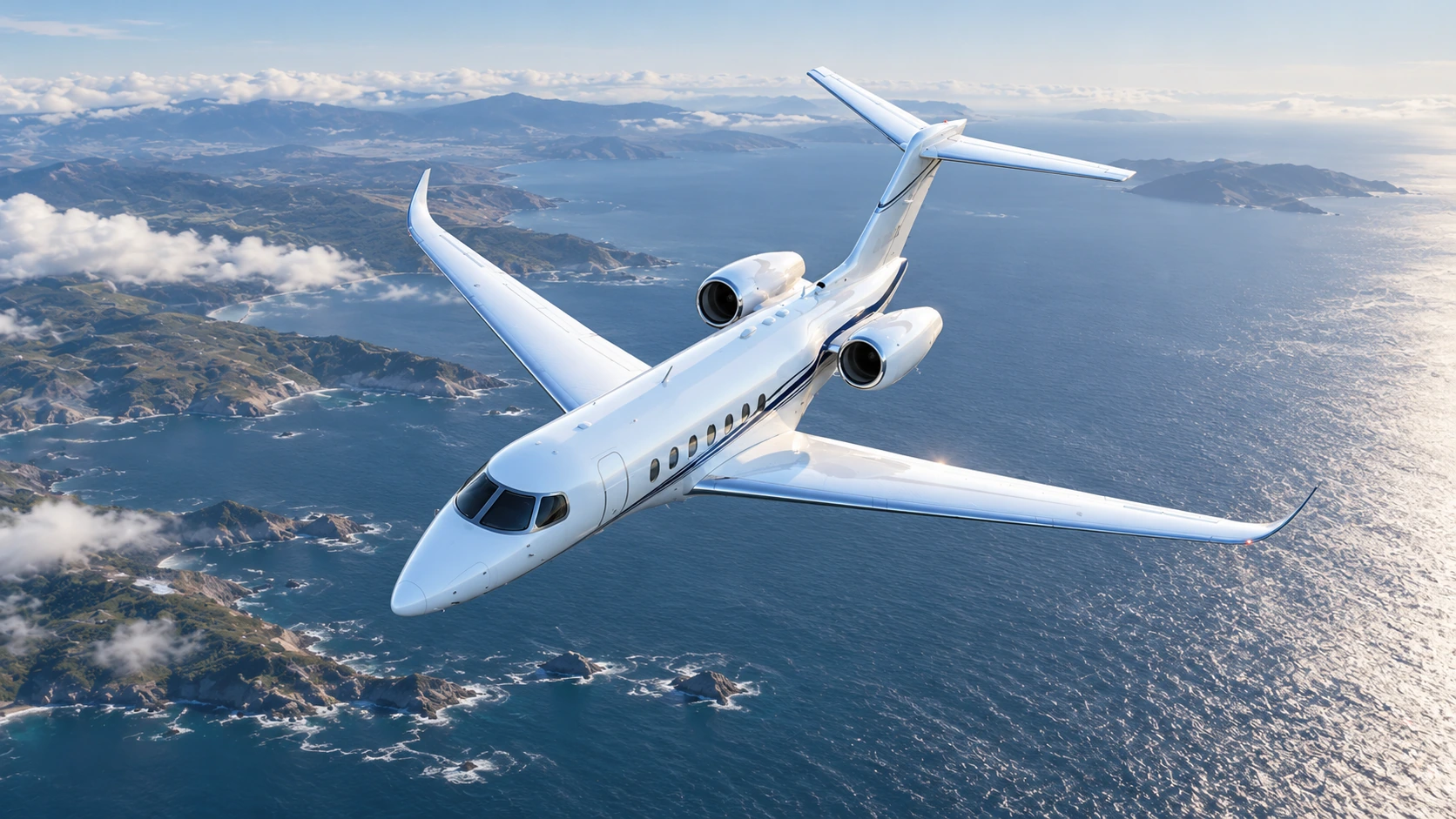
Information checked 31 October 2026. Manufacturer specifications and operator examples are identified separately. Images are reference-based AI illustrations.
The Citation Longitude and Praetor 600E approach the super-midsize brief with different strengths. The Longitude combines a flat-floor cabin with Garmin avionics and a published 3,500-nm range. The Praetor 600E stretches its headline range to 4,018 nm and adds a distinctive new cabin interface.
That 518-nm difference matters if it changes whether a useful journey needs a stop. If both aircraft comfortably cover the routes you actually fly, cabin layout, service arrangements and the available aircraft specification deserve more attention than the largest brochure number.
Citation Longitude versus Praetor 600E at a glance
| Item | Citation Longitude | Praetor 600E |
|---|---|---|
| Range | 3,500 nm | 4,018 nm |
| Flight deck | Garmin G5000 | Collins Aerospace Pro Line Fusion |
| Cabin emphasis | Flat floor, berthable seating and configurable interior | Updated seats, Smart Window and new cabin controls |
| Flight systems | Integrated autothrottles | Full fly-by-wire with active turbulence reduction |
Sources: Textron Aviation and Embraer. These are selected features, not exhaustive lists of standard and optional equipment.
What does the extra 518 nautical miles buy?
The arithmetic is straightforward: the Praetor’s published range is about 14.8% greater than the Longitude’s. That percentage compares advertised distances. It does not establish an equivalent percentage advantage in time, fuel consumption or ownership value.
Textron labels the Longitude’s figure as a four-passenger range in its Citation portfolio. Embraer’s current range-map assumptions include four passengers at 200 lb each, long-range cruise, NBAA IFR reserves and a 200-nm alternate, alongside specified weather and routing assumptions. A route map and a headline maximum should not be treated as interchangeable guarantees.
Consider two hypothetical requirements. A journey well inside both published ranges may leave the cabin and operator support as the deciding factors. A journey close to one aircraft’s limit may make the reserve margin and a potential fuel stop central to the decision. Neither conclusion can be settled by drawing a straight line between two airports.
A meaningful comparison asks both manufacturers or operators to plan the same trip with the same travellers, bags, date assumptions and alternate. Ask for the expected block time and any fuel stop, not simply whether the destination falls inside a coloured circle.
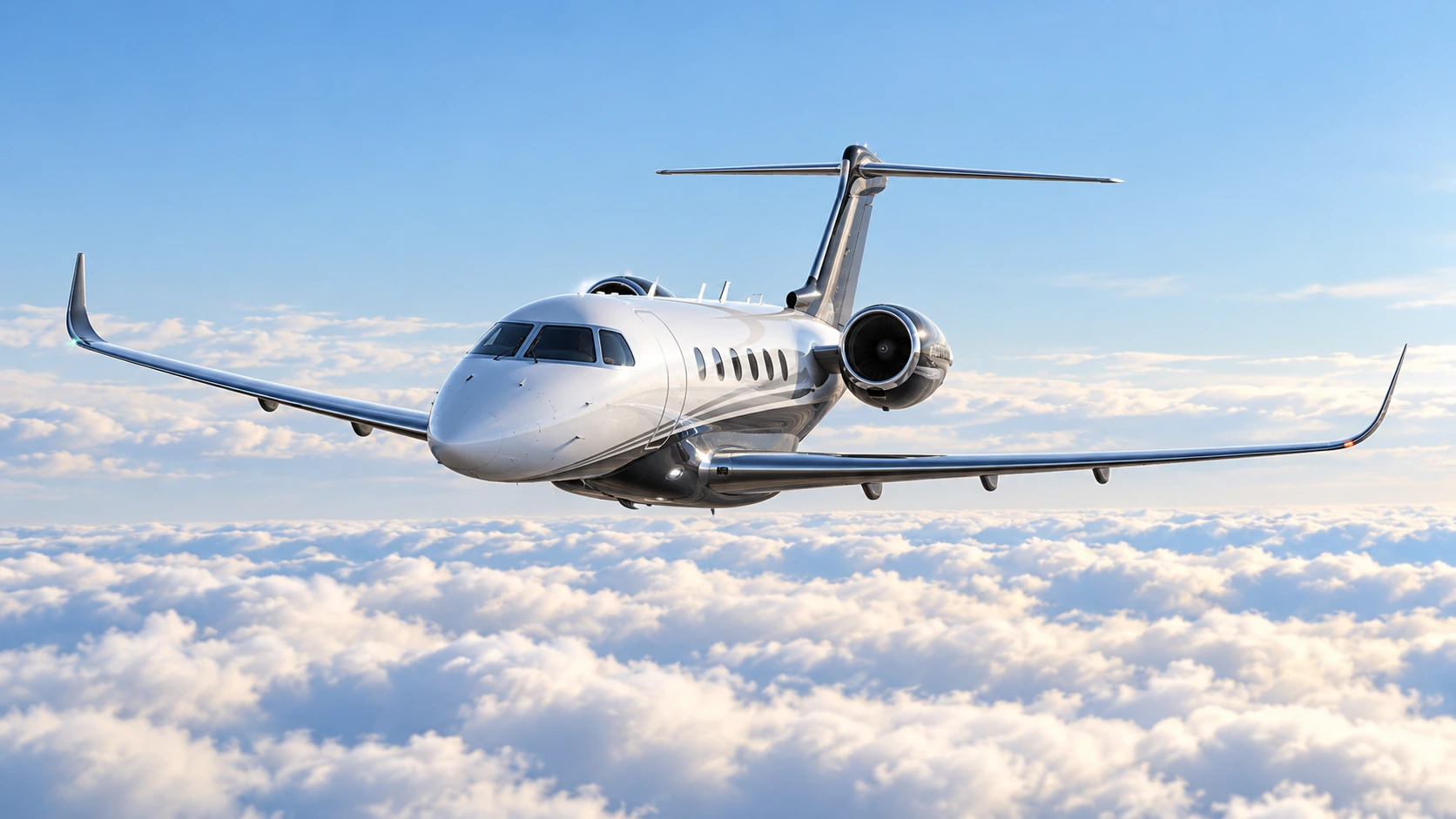
A familiar living space or a new digital centrepiece?
Textron lists the Longitude cabin at 1.83 m high, 1.96 m wide and 7.67 m long, with fully berthable seating and configurable layouts. Its emphasis is on a usable, flat-floor working and resting environment.
The Praetor 600E’s Smart Window offers entertainment, external-camera views and cabin control. Flexjet describes a 42-inch 4K OLED implementation with its own cabin equipment and lists up to nine passengers for its Praetor 600/600E offering. That is an operator-specific example, rather than a seating rule for every Praetor.
The revealing comparison would put people into their intended seats. Can two travellers work without blocking the aisle? Where does someone rest while others continue talking? Does the large display improve the trip for the person sitting beside it and for everyone else?
A screen can make a cabin more useful, but a rendering cannot establish seat comfort, sound levels or how easy the controls are to use. Those need an actual demonstration.
Different systems need a crew-level comparison
The G5000 and Pro Line Fusion are distinct flight-deck environments. Embraer also promotes the Praetor’s fly-by-wire system with active turbulence reduction. It should not be interpreted as eliminating turbulence or guaranteeing a smoother flight in every condition.
For an owner, the relevant discussion includes pilot familiarity, training, equipment on the specific aircraft and the support available where it will operate. A list of technology names is a starting point for that conversation, rather than a substitute for it.
Which should be on the shortlist?
- Start with the difficult trip. Identify the journey on which a stop would cause the most disruption, and obtain matched mission studies.
- Inspect the actual cabin plan. Compare working, dining and sleeping arrangements for the normal group size.
- Separate airframe from service offering. A fractional operator’s layout, connectivity and substitution terms may differ from an individually specified aircraft.
- Request a written ownership comparison. Include configuration, delivery timing, maintenance support and the intended flying programme. This guide does not supply a universal operating-cost winner.
The Praetor 600E has the larger advertised range. The more useful verdict is whether that advantage changes your itinerary—and whether the rest of the aircraft and service package suits the way you travel.
Read our Praetor 600E cabin feature for more on the interface, or explore the Private Jet Comparison collection.
Sources and method
- Textron Aviation — Longitude specifications and equipment
- Textron Aviation — Citation portfolio and range labels
- Embraer — Praetor 600E features and range-map conditions
- Flexjet — operator-specific Praetor 600/600E cabin and service example
This is source-based editorial analysis, not a flown comparison or purchase recommendation. Calculations use the quoted figures. Read our research and corrections policy.